
What Can Be Hiding Behind Old Bathroom Tiles?
An older bathroom can look perfectly serviceable right up until the first tile comes off the wall.
The shower runs. The toilet flushes. The floor feels solid enough. There may be some tired grout, an old-fashioned suite and a few layers of paint, but nothing that immediately suggests a serious problem.
Then the room is stripped out.
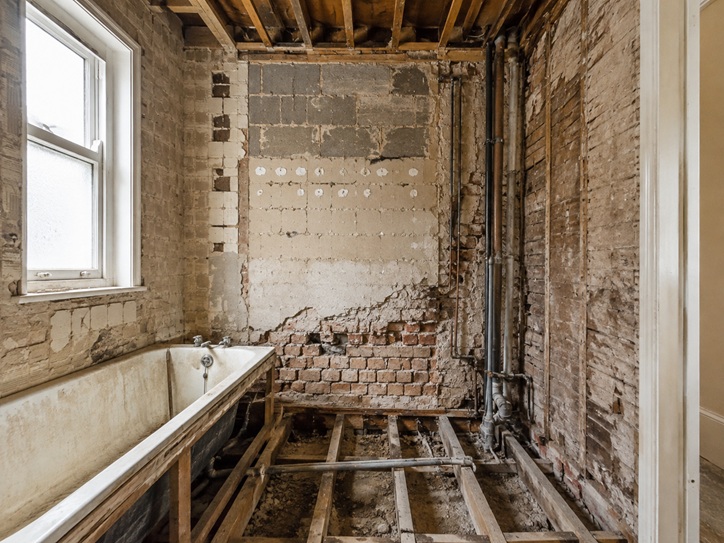
That is when the bathroom stops being a decorated room and starts becoming evidence.
Old pipe routes appear. Previous repairs become visible. Walls reveal what years of moisture have done to them. Floors show whether earlier fittings were installed properly. Sometimes everything underneath is remarkably sound. Sometimes one loose tile turns out to be the smallest part of the story.
For anyone planning a bathroom renovation in an older London property, it is useful to understand what installers may discover once the finishes are removed.
Case File 01: The Wall That Looked Fine
What you see before renovation: tiles that are dated but mostly intact.
What may appear after removal: crumbling plaster, weak board, old adhesive, cracked surfaces or patches from several generations of repairs.
Bathrooms are frequently renovated more than once during the life of a property. One installer may tile over plaster. Years later, another owner may tile over part of the first refurbishment. Holes are filled, pipe routes are changed and sections of wall are repaired using whatever materials were convenient at the time.
Much of that work disappears once the bathroom is finished.
The problem comes when the new renovation relies on those old layers being strong enough to support another finish.
If the substrate is loose, badly damaged or unsuitable, simply applying new tiles on top is not a proper solution. The surface may need to be repaired, replaced or reboarded so that the new installation begins from a dependable base.
This is why a complete bathroom fitting and remodelling service needs to account for more than the visible sanitaryware. The condition of the room underneath matters just as much as the products going into it.
Case File 02: A Small Stain With a Long History
What you see before renovation: discoloured grout, a slightly swollen skirting board or a mark near the bath.
What may appear after removal: evidence that water has been escaping slowly for months or years.
Bathroom leaks are not always dramatic.
A failed silicone joint can allow small amounts of water to reach the surrounding structure. A waste connection may seep only when the bath is full. Moisture can work its way behind tiles without producing an obvious puddle on the floor.
By the time the bathroom is refurbished, the leak itself may even have stopped.
The damage it caused may still be there.
Timber can soften, board can lose strength and damp areas can become unsuitable for receiving new finishes. A renovation therefore sometimes requires local repairs before the new bathroom can begin taking shape.
The important distinction is between replacing what looks old and correcting what has actually failed.
Case File 03: The Plumbing Map Nobody Has
What you see before renovation: a basin, toilet and bath in perfectly ordinary positions.
What may appear after removal: a maze of pipework taking routes nobody would choose today.
Older properties often contain plumbing that has evolved gradually.
A basin may have moved in the 1980s. A shower may have been added later. A new boiler may have changed supply routes. Pipes may have been extended around obstacles rather than fully rerouted.
None of this is necessarily a problem if the system is sound. But it can affect what is practical during the new refurbishment.
For example, moving a toilet may involve more than changing its position on the floor plan because the waste route still has to work. A concealed shower may require suitable depth in the wall. A new vanity may expose pipe positions that were previously hidden inside a pedestal.
This is why layout decisions should be tested against the actual room rather than designed entirely around photographs. A professional bathroom design can take the existing services into account while exploring whether a new arrangement is worth the extra work.
Case File 04: The Floor That Was Doing More Work Than Expected
What you see before renovation: vinyl, tiles or another finished bathroom floor.
What may appear after lifting it: uneven boards, historic cut-outs, loose sections, old adhesive or areas that need strengthening.
The bathroom floor has several jobs.
It supports the sanitaryware. It receives the finished flooring. It may contain pipe routes. And if the new design uses large-format tiles or a particularly precise finish, the surface needs to be sufficiently stable and even.
Older floors are not automatically unsuitable, but previous alterations can leave them patched in several places.
A bath may have hidden an old opening for decades. Pipework may have been moved through boards. Sections may have been replaced at different times.
Once those details are exposed, the fitter can decide what needs attention before the finished floor is installed.
That preparation is especially important when the renovation includes new bathroom flooring or tiling, because the quality of the visible finish depends heavily on the base beneath it.
Case File 05: Evidence of Several Different Electricians
What you see before renovation: a ceiling light, extractor fan and perhaps an illuminated mirror.
What may appear during work: wiring added at different times as the bathroom changed.
Modern bathrooms often contain more electrical features than the rooms they replace.
Lighting, extraction, mirrors, underfloor heating and other equipment all need consideration, and older arrangements may not correspond neatly with the new design.
The important point is that electrical decisions need to happen before the room is fully finished.
There is little benefit in creating a perfect tiled wall and then realising the chosen mirror requires a supply that was never planned.
During a complete refurbishment, the electrical requirements can be considered alongside the new layout so that positions are prepared at the appropriate stage rather than treated as an afterthought.
Case File 06: The Previous Renovation
What you see before renovation: one bathroom.
What may appear during strip-out: two or three earlier bathrooms underneath it.
This is one of the more interesting realities of older properties.
A bathroom does not always get completely rebuilt each time it is updated. Some elements are removed, some are covered and some remain buried behind the next finish.
You may discover old tile adhesive beneath newer tiles, redundant pipes behind boxing, blocked openings, previous wall finishes or strange changes in floor level.
None of these discoveries automatically means the renovation will become a major construction project.
They simply need to be assessed properly.
In some cases, the correct decision is to leave a sound element alone. In others, removing the accumulated layers creates a cleaner and more reliable base for the new room.
Where the work extends beyond the bathroom itself, the company’s broader house refurbishment and renovation services can also accommodate projects where neighbouring walls, flooring or other parts of the property require attention.
The Question Homeowners Usually Ask Next
Once hidden issues are mentioned, the natural question is:
“Does renovating an older bathroom mean my budget is unpredictable?”
Not necessarily.
A proper survey can identify many potential complications before work starts. Experienced fitters also know the kinds of issues that are common in older bathrooms and can discuss where uncertainty may remain.
What nobody can do honestly is guarantee the condition of a completely concealed surface without seeing it.
This is why it is useful to keep some flexibility in a renovation budget, particularly when the bathroom has not been substantially refurbished for a long time.
Our bathroom renovation cost guide explains the wider factors that influence project pricing, including the difference between a straightforward replacement and more involved remedial work.
What Happens When Nothing Bad Is Found?
That happens too.
Not every older bathroom is hiding rotten floors, leaking pipes or damaged walls.
Sometimes the suite is simply dated. The existing services are usable. The walls need ordinary preparation and the renovation progresses without any significant surprises.
That is the ideal outcome.
The purpose of investigating the room is not to search for expensive problems. It is to make sure the new bathroom is installed on top of something worth keeping.
Closing the Case
An older bathroom should not be judged only by what is visible on the first survey.
The tiles, suite and fittings are merely the latest layer.
Behind them may be decades of plumbing changes, repairs and previous refurbishment work. Most of it may be perfectly serviceable. Some of it may need correcting before the new finishes go on.
The objective is not to replace everything because it is old. It is to identify what is sound, repair what is not, and build the new bathroom from a dependable starting point.
If you are planning to renovate an older bathroom in London, Bathroom Fitting Experts can inspect the room, discuss the proposed design and provide a quotation for the work involved. You can request a free bathroom survey and quote before deciding how far the refurbishment needs to go.