
Bath or Walk-In Shower? Which Is Right for You?
Few bathroom decisions divide homeowners as quickly as this one.
Do you keep the bath, replace it with a walk-in shower, or try to squeeze both into the room?
There is no universally correct answer because the best choice depends on how the bathroom will actually be used. A family bathroom has different priorities from an ensuite. A homeowner planning to stay for twenty years may think differently from someone renovating before selling.
Instead of looking at baths and showers purely as design features, it helps to compare them against the things that matter in everyday life.
So here is the decision from six different angles.
Round 1: Which One Uses the Space Better?
Advantage: Walk-in shower
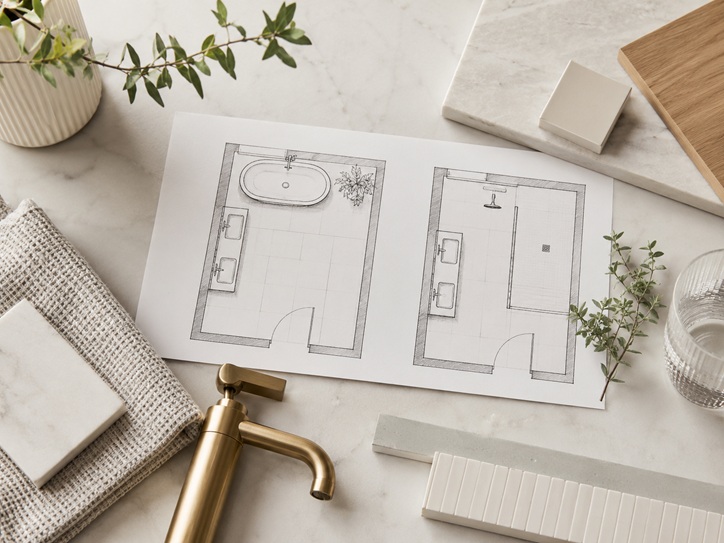
In a compact bathroom, removing a full-size bath can dramatically change how the room feels.
A walk-in shower can usually be designed around the available width more flexibly than a bath. Frameless or lightly framed glass also keeps the room visually open instead of creating another solid boundary.
This does not necessarily mean the shower itself occupies less floor area. A generous shower may take up a similar footprint to a bath. The difference is often how that footprint interacts with the rest of the room.
A well-positioned shower can open up clearer movement around the basin and toilet, allow a larger vanity, or provide space for additional storage.
For very small rooms, working through different arrangements with a professional bathroom design service can help determine whether removing the bath genuinely improves the layout or simply changes one compromise for another.
Round 2: Which One Works Better for Family Life?
Advantage: Bath
For households with young children, a bath remains extremely practical.
Bathing toddlers and young children is generally easier in a bath than under a shower. It can also be useful for soaking clothes, washing certain household items and dealing with the countless messy situations family bathrooms tend to encounter.
This is where lifestyle should override design trends.
If the bath is used several times a week, replacing it simply because a walk-in shower looks more contemporary may create regret later.
On the other hand, if children are older and nobody in the household takes baths, the practical argument becomes much weaker.
The right question is not, “Should a family bathroom have a bath?” It is, “Does our family actually use one?”
Round 3: Which One Is Easier to Use Every Day?
Advantage: Usually walk-in shower
Most people shower far more often than they bathe.
If that describes your household, dedicating the best part of the room to a generous shower can make everyday use much more comfortable.
A walk-in shower can provide more elbow room, easier entry and space for features such as a rainfall head, handheld shower, recessed niche or built-in bench.
By comparison, showering over a bath usually means stepping over a higher edge and standing within a narrower area.
That arrangement is perfectly functional, especially where space is limited and both bathing and showering are required. But if the bath itself is rarely used, the compromise becomes harder to justify.
Round 4: Which One Wins for Accessibility?
Advantage: Walk-in shower
Accessibility can become one of the strongest arguments for replacing a bath.
Climbing over the side of a bath may become difficult for people with reduced mobility, joint problems or balance concerns. A carefully designed shower with a low threshold or level-access arrangement can make entering and leaving significantly easier.
There is also more flexibility to include a seat, grab rails or a handheld shower later if needs change.
This does not mean an accessible bathroom has to look clinical. Thoughtful product choice and good planning can integrate practical features into a contemporary design.
If long-term usability matters, it is worth considering it during the initial bathroom fitting and remodelling rather than waiting until the existing arrangement becomes difficult to use.
Round 5: Which One Is Easier to Keep Clean?
Result: It depends on the design
A walk-in shower often looks easier to clean because there are fewer bulky components.
Large tiled surfaces and a simple glass screen can certainly make maintenance straightforward. But more glass also means more visible water marks, especially in hard-water areas.
A bath has its own cleaning challenges. There are edges, seals and sometimes a shower screen or curtain to maintain. Freestanding baths can also create awkward gaps if they are positioned too close to walls.
What matters most is the detail of the installation.
Well-planned surfaces, accessible corners and sensible drainage make a bigger difference than whether the room contains a bath or shower.
Tile choice affects maintenance too. Large tiles reduce the number of grout lines, while detailed mosaics require more joints. You can explore different finish options through the company’s bathroom tiling and flooring services.
Round 6: Which One Is Better for Resale?
Result: The property matters more than the rule
You will often hear that removing a bath automatically reduces a property’s appeal.
The reality is more nuanced.
In a family-sized home with only one bathroom, retaining a bath may appeal to a wider range of buyers. Parents with young children may see it as a practical necessity.
In a small flat aimed at one or two occupants, a cramped bath with an awkward shower above it may be less attractive than a spacious, high-quality walk-in shower.
If the property has more than one bathroom, the decision becomes easier. Keeping a bath in the main family bathroom while using a walk-in shower in an ensuite can provide both options.
Resale matters, but it should not force you into a poor layout for years simply to satisfy a hypothetical future buyer.
What About Installation Cost?
This is where the comparison becomes less obvious.
A basic bath can be relatively straightforward to install when plumbing positions remain unchanged.
A large walk-in shower may require more preparation, waterproofing, drainage work, glass and tiling. If the shower is being relocated, additional plumbing may also be necessary.
Equally, premium freestanding baths, expensive brassware and major layout changes can make the bath option considerably more costly.
There is therefore no useful rule saying one option is always cheaper.
The cost depends on the room, the chosen products and how much the existing layout needs to change. Our bathroom renovation cost guide explains some of the wider factors that affect a complete refurbishment budget.
The Hybrid Option: Can You Have Both?
Sometimes the best answer is not choosing.
If the room is large enough, a separate bath and shower can work extremely well. The bath becomes something used intentionally rather than doubling as the shower area, while the walk-in shower handles everyday use.
The difficulty is space.
Forcing both into a room that is too small can leave you with a tiny shower, undersized vanity and very little usable floor. Two compromised features are not necessarily better than one excellent one.
A shower-over-bath arrangement remains the practical middle ground for many homes. It allows bathing and showering in one footprint, even if it does not provide the same openness as a separate shower.
Your Final Decision: Five Questions to Answer
If you are still unsure, ignore photographs and trends for a moment and answer these five questions honestly.
- How often does anyone in the household actually take a bath?
- Would removing it materially improve the layout?
- Will children or future accessibility needs affect how the room is used?
- Is this the only bathroom in the property?
- Would you prefer one generous feature or two compromised ones?
Your answers usually make the choice much clearer.
Choose the Bathroom You Will Actually Use
A bath can be the right decision. A walk-in shower can be the right decision. Keeping both can also be right.
The mistake is treating any of those options as compulsory.
Your bathroom should be designed around how the household lives, not around a feature you think a bathroom is supposed to contain.
Bathroom Fitting Experts can assess the existing layout, discuss whether a bath, walk-in shower or combined arrangement makes the best use of your space, and handle the complete installation. If you are planning a refurbishment in London, you can request a free bathroom fitting quote and discuss the options for your room.